

The Hidden Reason You Keep Fighting About Nothing
Unlock The Hidden Messages in Your Relationship Conflicts and Feel Seen

What if every petty argument you have isn’t petty at all? What if your fight over who forgot the bananas is actually a desperate cry for something far deeper?
You’re arguing about who forgot to buy bananas, and somehow it’s escalated into questioning whether you even care about each other anymore. But it was never about the bananas.
Here’s the Valentine’s Day paradox: the more you fight about nothing, the more you’re fighting for everything that matters. For instance, you might be squabbling about who left the toothpaste cap off, but what you’re really fighting for is respect, feeling heard, or equal partnership in the relationship. The little stuff often reveals the big stuff that needs attention. So, in a way, those small fights can be opportunities to address the things that matter in keeping a relationship strong.
At the heart of most relationship conflicts lies the painful feeling of being unseen, unheard, and misunderstood. This fundamental need for connection is where the Internal Safety Scanner comes in.

Think of your nervous system as a constant, subconscious radar looking for signs of safety or threats. When we feel seen, heard, and understood, our internal scanner signals “All clear,” and our body relaxes. We feel safe and connected.
But when this need goes unmet, the scanner triggers an alarm. Isolation, frustration, and disconnection seep in like water through cracks in a foundation. Your body goes into defensive mode not because you’re trying to be difficult, but because your system is signaling that you’re unprotected.
The Costume of Conflict
Surface conflicts are rarely about what they seem to be.
Just last week, a client told me about a massive blowup with her partner over leaving the garage door open. Twenty minutes into the argument, they both realized they weren’t actually upset about the garage door at all. She was feeling unheard about bigger decisions in their life, and he was feeling criticized no matter what he did. The garage door was just the unfortunate stand-in for everything they couldn’t quite say.
A fight about money might actually be about feeling insecure or unappreciated in financial decisions, or it might reveal different values around security and freedom. A conflict about sex might really be about feeling unloved, disconnected, or unheard in the relationship. Even arguments about chores can mask deeper needs for respect, partnership, or appreciation.
These surface issues carry symbolic meaning. They represent our deeper emotional needs like security, love, autonomy, respect, and care. When these needs aren’t met, conflicts arise not because of the dishes in the sink, but because of what those dishes have come to represent to your nervous system.
Try this right now: The next time you feel a familiar fight brewing, pause and check in with your body. Where do you feel tension? In your chest? Your shoulders? Your stomach? What’s the quiet ache whispering beneath the surface? Sometimes just naming the physical sensation can help you recognize what you’re really feeling before the words come out sideways.
When we don’t feel connected to our partner, even small issues become monumental conflicts. We’re no longer responding to the present moment, but to all those accumulated moments when we felt alone. Our words become laced with blame, criticism, and anger. We’re craving understanding, but our words fall flat and unheard.
When our needs aren’t met, insecurity creeps in. We wonder if we’re worthy of love, care, or attention. Disappointment sets in, bringing sadness, frustration, and even hopelessness. We feel vulnerable, exposed, unprotected.
In this state, it’s natural for that inner alarm to respond in ways that don’t serve us or our relationships. We withdraw, shut down, become reactive and defensive. In the heat of the moment, we lash out with blame or criticism. But deep down, we’re just yearning to be seen, heard, and understood.
The real heartbreak is that both partners are usually fighting for the same thing (to feel safe and loved) while accidentally making each other feel less safe in the process. We’re basically two people trying to feel secure with each other while accidentally stepping on each other’s emotional toes.
What Your Fights Are Actually Saying
What if blame, defensiveness, and criticism are simply clumsy attempts to express fear and requests for care? What if your Internal Safety Scanner is just doing its job, trying to alert you to danger, but the only language it knows sounds like an attack?
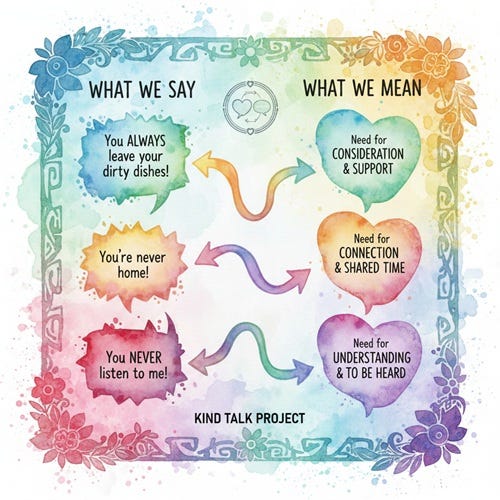
Translation Guide: What You Say vs. What You Mean
Blame often masks longing. “You never listen to me” really means “I feel like I’m not being heard. Can you please listen to me and understand my perspective?”
Defensiveness often masks fear. “I’m not the only one who messes up around here!” really means “I’m feeling overwhelmed and worried that I’ll be blamed for everything. Can we work together to find a solution?”
Criticism often masks requests for care. “You’re so lazy for not doing the dishes” really means “I’m feeling overwhelmed with household chores. Can you help me with the dishes tonight?”
When we translate our pain into these deeper truths, something remarkable happens. Our words, once laced with hurt and anger, become vessels for vulnerability and connection. We gain clarity on what’s driving our reactions. We begin to see that the other person’s behavior isn’t about us, but about their own fears and longings.
This shift has a profound effect on your Internal Safety Scanner. It softens, signaling that it’s safe to relax its defensive posture. The tension dissipates. We’re no longer reacting to perceived threats. Instead, we can approach each other with curiosity.
Want to dive deeper into understanding your needs?
Get my free eBook, The Power of Needs to help identify them.
When Needs Are Met, Disagreement Becomes Safe
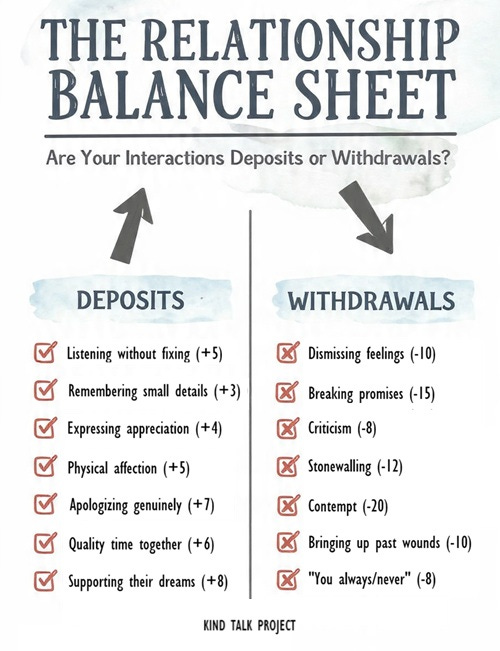
Here’s where the paradox resolves itself. When couples feel seen and heard, they can disagree without damaging each other. They’re coming from a place of mutual respect, understanding, and care. They can focus on finding solutions that meet both their needs, rather than trying to win the argument.
This looks like active listening without becoming defensive. “I can tell this matters to you deeply. Help me understand what this represents for you.” It means offering empathy and validation, even in disagreement. “I can see why you’d feel that way. I appreciate your perspective.”
It means focusing on needs, not positions. “I need to feel financially secure. Can we find a compromise that meets both our needs?” It means using “I” statements that express without blaming. “I feel overwhelmed when the house is messy. Can we work together to find a solution?” And it means taking breaks when needed. “I’m feeling overwhelmed. Can we take a break and come back to this later?”
In everyday moments, feeling seen and heard can be as simple as your partner remembering your favorite coffee, a friend asking follow-up questions and listening attentively, or a family member acknowledging your feelings even when they disagree with your perspective.
Not feeling seen looks like talking to a brick wall, being interrupted when sharing your feelings, or being blamed for things that aren’t entirely your responsibility. (You know the feeling. We’ve all been there, probably this week.)
The Real Breaking Point
Relationships don’t break down because of conflict, but because of disconnection. It’s the accumulation of unspoken words, unmet needs, and unresolved emotions that creates the cracks. When we feel seen, heard, and understood, conflicts become opportunities for growth and deepening connection.
Rebuilding connection takes time and effort, but it’s possible, one moment at a time. It starts with a willingness to be vulnerable, to listen deeply, and to understand each other’s needs and fears.
In the end, it’s not about avoiding conflicts or disagreements. It’s about being willing to connect with each other on a deeper level. By recognizing and addressing our needs, we can communicate more effectively, build stronger relationships, and create more compassion in our lives.
Try this tonight: Before bed, tell your partner one specific moment when you felt seen by them this week, and notice what shifts between you. Sometimes the smallest acknowledgment of connection can remind you both why you’re in this together.
As you reflect on your own relationships, ask yourself: What are the unmet needs driving the conflicts in your life? What would happen if you approached these conflicts with curiosity, empathy, and a willingness to understand?
The power to transform your relationships is in your hands, one moment at a time.
Let’s Get Real for Valentine’s Day
What’s a recurring fight in your relationship, and what deeper need is hiding underneath it? Drop a comment below and try translating your conflict into what you’re really asking for.
Here’s an example: We bicker about how to load the dishwasher, but what I really need is to know that my way of doing things has value too.
If this resonated with you, share it with your person. Sometimes the best gift is simply saying “I finally understand what we’ve been fighting about.”
This stirs up so many good points and reflections!! 🩷
The “bananas” thing is so real, ugh... I’ve watched an entire argument grow legs and sprint off a cliff over something that was never the point. Calling it the “Costume of Conflict” is exactly the kind of phrase that makes me go quiet for a second...